Installing Metal Roofing: Benefits, Costs, and What to Expect
By Signature Exteriors
Key Takeaways
- Installing metal roofing offers long-term durability, weather resistance, and energy efficiency for Connecticut homeowners.
- Metal roofs typically last significantly longer than traditional roofing materials when professionally installed.
- The installation process involves specialized techniques, underlayment systems, and ventilation considerations.
- Roof complexity, material selection, and structural preparation all affect project scope.
- Signature Exteriors helps homeowners understand the installation process and choose the right roofing system for long-term protection.
Metal roofing has become one of the fastest-growing roofing options for residential homes across Connecticut. Homeowners are increasingly drawn to its modern appearance, impressive lifespan, energy efficiency, and ability to withstand harsh weather conditions. While asphalt shingles remain popular, more property owners are exploring the long-term advantages of installing metal roofing.
Still, many homeowners are unsure what the installation process involves, how metal roofing compares to traditional systems, and what to expect during the project itself.
At Signature Exteriors, we help Connecticut homeowners evaluate roofing solutions based on durability, aesthetics, maintenance expectations, and long-term value. This guide explains the benefits of metal roofing, the factors that influence project scope, and what homeowners should expect before, during, and after installation.
Why Metal Roofing Has Gained Popularity
Metal roofing has evolved significantly over the past two decades. Modern systems are no longer limited to agricultural buildings or commercial structures. Today’s residential metal roofing options offer sleek, attractive finishes that complement a wide range of architectural styles.
Homeowners often choose metal roofing because it provides:
- Exceptional durability
- Strong weather resistance
- Long lifespan
- Modern curb appeal
- Energy efficiency
- Reduced maintenance requirements
For homes exposed to Connecticut’s seasonal weather conditions, metal roofing offers reliable long-term performance.
Understanding Metal Roofing Systems
There are several types of residential metal roofing systems available.
Standing Seam Metal Roofing
Standing seam roofing features vertical metal panels with concealed fasteners. This system is especially popular for modern and contemporary homes because of its clean appearance and superior weather protection.
Metal Shingles
Metal shingles are designed to mimic the appearance of:
- Traditional shingles
- Slate
- Wood shake
- Tile roofing
These systems provide the benefits of metal while maintaining a more classic residential appearance.
Corrugated Metal Roofing
Corrugated panels are more common on barns, workshops, and some modern-style residential properties.
Each roofing style offers different visual and performance benefits depending on the home’s design and the homeowner’s goals.
Homeowners considering a roofing upgrade can explore Signature Exteriors’ professional roof replacement services to better understand available roofing options.
The Biggest Benefits of Installing Metal Roofing
Long-Term Durability
One of the most significant advantages of metal roofing is its lifespan.
A professionally installed metal roof can often last decades longer than traditional roofing systems. Metal roofing resists:
- Cracking
- Rot
- Insect damage
- UV deterioration
- Moisture-related warping
This durability makes metal roofing attractive for homeowners planning long-term ownership.
Weather Resistance in Connecticut
Connecticut homes face challenging weather conditions throughout the year.
Metal roofing performs especially well against:
- Heavy snow accumulation
- Wind-driven rain
- Ice dams
- Freeze-thaw cycles
- Strong wind gusts
Unlike some roofing materials, metal sheds snow efficiently, reducing excessive snow buildup during winter storms.
This weather resistance is especially valuable for homeowners in coastal and inland Connecticut communities where severe weather events are common.
Energy Efficiency Advantages
Energy efficiency is another major reason homeowners choose metal roofing.
Metal roofs reflect solar heat more effectively than many traditional roofing systems, helping reduce attic heat buildup during summer months.
Benefits may include:
- Improved indoor comfort
- Reduced cooling demands
- More stable attic temperatures
- Better overall energy performance
Proper insulation and ventilation further improve roofing efficiency and long-term performance.
The National Roofing Contractors Association also highlights the importance of proper roofing system design and ventilation for maximizing roof performance and energy efficiency.
What Impacts Metal Roofing Project Scope?
Many homeowners researching installing metal roofing want to understand what influences the overall project.
Several key factors affect project complexity.
Roof Size
Larger roofs naturally require:
- More materials
- Additional labor
- Longer installation timelines
Roof Pitch and Complexity
Steep roofs and complex rooflines increase labor requirements because they require additional safety measures and precision installation.
Features such as:
- Dormers
- Skylights
- Chimneys
- Valleys
- Multiple roof elevations
all require detailed flashing and waterproofing work.
Material Selection
Different metal roofing materials and finishes affect both appearance and installation requirements.
The Metal Roofing Installation Process
Understanding the installation process helps homeowners feel more prepared before work begins.
Step 1: Roof Inspection
Every project begins with a detailed inspection of the existing roofing system.
This evaluation helps identify:
- Structural concerns
- Ventilation issues
- Water damage
- Existing flashing problems
Step 2: Material Selection
Homeowners choose:
- Panel style
- Finish color
- Fastener system
- Trim and flashing details
The right combination depends on both appearance goals and performance expectations.
Step 3: Tear-Off and Preparation
Old roofing materials are typically removed so the roof deck can be inspected thoroughly.
During this stage, contractors may uncover:
- Damaged decking
- Rot
- Moisture damage
- Structural weaknesses
Any compromised areas must be repaired before installation continues.
Step 4: Underlayment Installation
High-quality underlayment is critical beneath metal roofing systems.
This layer helps protect against:
- Moisture intrusion
- Condensation
- Ice dam issues
- Wind-driven rain
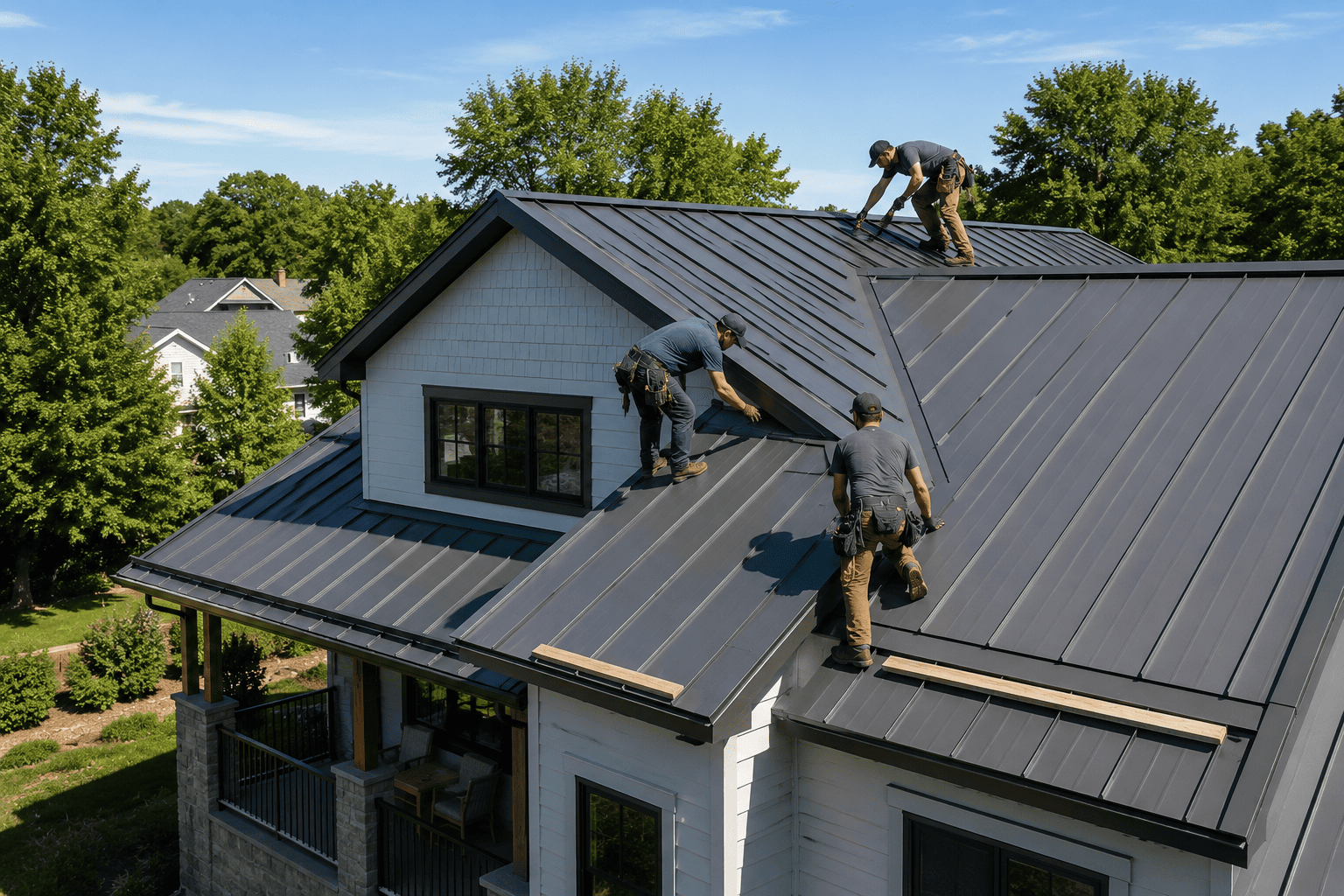
Step 5: Metal Panel Installation
Panels are carefully measured, aligned, and secured according to manufacturer guidelines.
Proper installation is critical because incorrect fastening or spacing can affect roof expansion, contraction, and long-term durability.
Step 6: Flashing and Finishing Details
Flashing is installed around:
- Chimneys
- Skylights
- Roof edges
- Valleys
- Vents
These details are essential for waterproofing performance.
Step 7: Final Inspection and Cleanup
The final stage includes:
- System inspection
- Cleanup of materials and debris
- Warranty review
- Homeowner walkthrough
Metal Roofing and Noise Concerns
One common misconception is that metal roofs are excessively loud during rainstorms.
In reality, professionally installed residential metal roofing systems include:
- Roof decking
- Underlayment
- Insulation
- Attic barriers
These layers significantly reduce sound transmission.
For most homeowners, the difference in interior noise is minimal.
Maintenance Expectations
Metal roofing generally requires less maintenance than many traditional roofing systems.
However, homeowners should still:
- Schedule periodic inspections
- Clear debris from valleys and gutters
- Check flashing after major storms
- Monitor fasteners and sealants over time
Routine maintenance helps maximize roofing lifespan.
Homeowners dealing with severe weather concerns may also benefit from Signature Exteriors’ professional storm damage roof repair services.
Metal Roofing vs Asphalt Shingles
Both roofing systems offer advantages.
Asphalt Shingles
Advantages include:
- Lower upfront investment
- Traditional appearance
- Easier spot repairs
Metal Roofing
Advantages include:
- Longer lifespan
- Greater weather resistance
- Lower long-term maintenance
- Modern appearance
- Better energy efficiency
The right choice depends on the homeowner’s goals, budget, and long-term plans.
Common Misconceptions About Metal Roofing
“Metal Roofs Rust Easily”
Modern residential metal roofing systems include protective coatings designed to resist corrosion.
“Metal Roofs Attract Lightning”
Metal roofing does not increase the likelihood of lightning strikes.
“Metal Roofing Only Fits Modern Homes”
Today’s metal roofing styles complement many architectural styles, including traditional homes.
Why Installation Quality Matters
Even premium roofing materials can fail if installed incorrectly.
Proper installation ensures:
- Weather resistance
- Ventilation performance
- Flashing protection
- Manufacturer warranty compliance
- Long-term durability
At Signature Exteriors, every roofing project is completed according to manufacturer specifications and Connecticut building codes.
Coordinating Roofing with Other Exterior Improvements
Many homeowners coordinate roofing upgrades with additional exterior improvements to maximize curb appeal and protection.
For example, upgrading siding alongside a new roof can dramatically improve both appearance and efficiency. Homeowners can explore Signature Exteriors’ professional siding replacement services when planning larger exterior renovations.
Signs It May Be Time to Consider Metal Roofing
Homeowners often begin exploring metal roofing after experiencing:
- Repeated roof repairs
- Storm damage
- Aging shingles
- High maintenance costs
- Ice dam issues
- Energy efficiency concerns
Metal roofing may provide a stronger long-term solution for homes exposed to severe weather conditions.
Why Connecticut Homeowners Choose Signature Exteriors
Homeowners throughout Connecticut trust Signature Exteriors because we provide:
- Detailed roof evaluations
- Experienced roofing crews
- Transparent project planning
- High-quality roofing materials
- Professional installation standards
- Long-term roofing solutions
We help homeowners choose roofing systems that align with both performance goals and architectural style.
FAQ
How long does metal roofing typically last?
A professionally installed metal roof can often last significantly longer than traditional roofing systems when properly maintained.
Does metal roofing work well in Connecticut winters?
Yes. Metal roofing performs exceptionally well against snow, ice, and freeze-thaw cycles.
Is metal roofing energy efficient?
Yes. Metal roofs reflect solar heat effectively and can help reduce attic heat buildup.
Can metal roofing be installed on most homes?
In most cases, yes. A professional inspection helps determine structural compatibility and installation requirements.
Does metal roofing require maintenance?
Yes, but generally less maintenance than many traditional roofing systems.
Is Metal Roofing Right for Your Home?
Installing metal roofing is a long-term investment in durability, efficiency, and weather protection. While every home has different needs, many Connecticut homeowners appreciate the combination of modern appearance, low maintenance, and long-lasting performance that metal roofing provides.
The key to maximizing those benefits is professional installation. Proper underlayment, flashing, ventilation, and panel alignment all play a major role in long-term success.
If you are considering metal roofing for your home, Signature Exteriors can help you evaluate your options, understand the installation process, and choose a roofing system designed for long-term protection and value.