
Fiber Cement Siding Installation: Benefits, Costs, and Long-Term Value
By Signature Exteriors
Key Takeaways
- Fiber cement siding installation provides homeowners with a durable, attractive exterior that can withstand demanding weather conditions.
- Fiber cement can replicate the appearance of traditional wood siding while requiring less routine maintenance.
- Project costs depend on home size, architectural complexity, product selection, removal of existing siding, trim, preparation, and labor.
- Because fiber cement is heavier and requires specialized cutting and installation techniques, professional installation is particularly important.
- Long-term value comes from balancing upfront cost with durability, maintenance requirements, weather resistance, and curb appeal.
In this article
What Is Fiber Cement Siding?
Homeowners replacing exterior siding have more options than ever, and fiber cement has become an appealing choice for properties where durability and architectural appearance are priorities. Fiber cement siding installation uses siding manufactured primarily from cement, sand, cellulose fibers, and water. The resulting material can be manufactured in several profiles and textures, including products designed to resemble traditional painted wood. Unlike natural wood, fiber cement does not rely on the same level of ongoing protection against rot and insect damage. It also provides a substantial exterior surface capable of handling Connecticut’s changing weather. For homeowners comparing siding materials, understanding the benefits, installation requirements, costs, and expected long-term value can help determine whether fiber cement is appropriate for their property.
Why Choose Fiber Cement Siding?
Fiber cement combines several characteristics homeowners often want from exterior siding.
Durability
One of the primary advantages of fiber cement is its durability. When properly installed and maintained, it can provide decades of exterior protection. The material is resistant to many common problems that affect other siding products, including:
- Rot
- Insect damage
- Warping
- Cracking from normal temperature changes
- Moisture-related deterioration when properly installed
This durability can be particularly valuable in Connecticut, where exterior materials are exposed to heat, humidity, rain, snow, ice, and freezing temperatures.
Appearance
Fiber cement is available in numerous colors, textures, and profiles. Homeowners can choose products that resemble:
- Traditional wood clapboard
- Cedar shingles
- Vertical siding
- Board and batten
- Smooth contemporary siding
This versatility allows fiber cement to complement both traditional and modern architecture.
Lower Maintenance Than Wood
Wood siding provides a classic appearance, but maintaining it can require regular painting, staining, sealing, and repairs. Fiber cement can provide a similar architectural appearance without many of the maintenance concerns associated with natural wood. It still requires routine inspection and maintenance, particularly of painted surfaces, joints, flashing, and caulking, but homeowners generally do not need to worry about insect damage or wood rot affecting the siding material itself.
Fiber Cement vs. Vinyl Siding
Vinyl and fiber cement are both popular siding options, but they offer different advantages.
Vinyl may appeal to homeowners prioritizing minimal maintenance and a more economical installation, while fiber cement may be preferred when a substantial feel and wood-inspired appearance are priorities. Homeowners comparing materials can explore Signature Exteriors’ siding installation and replacement services to learn more about siding options for Connecticut homes.
What Does Fiber Cement Siding Installation Involve?
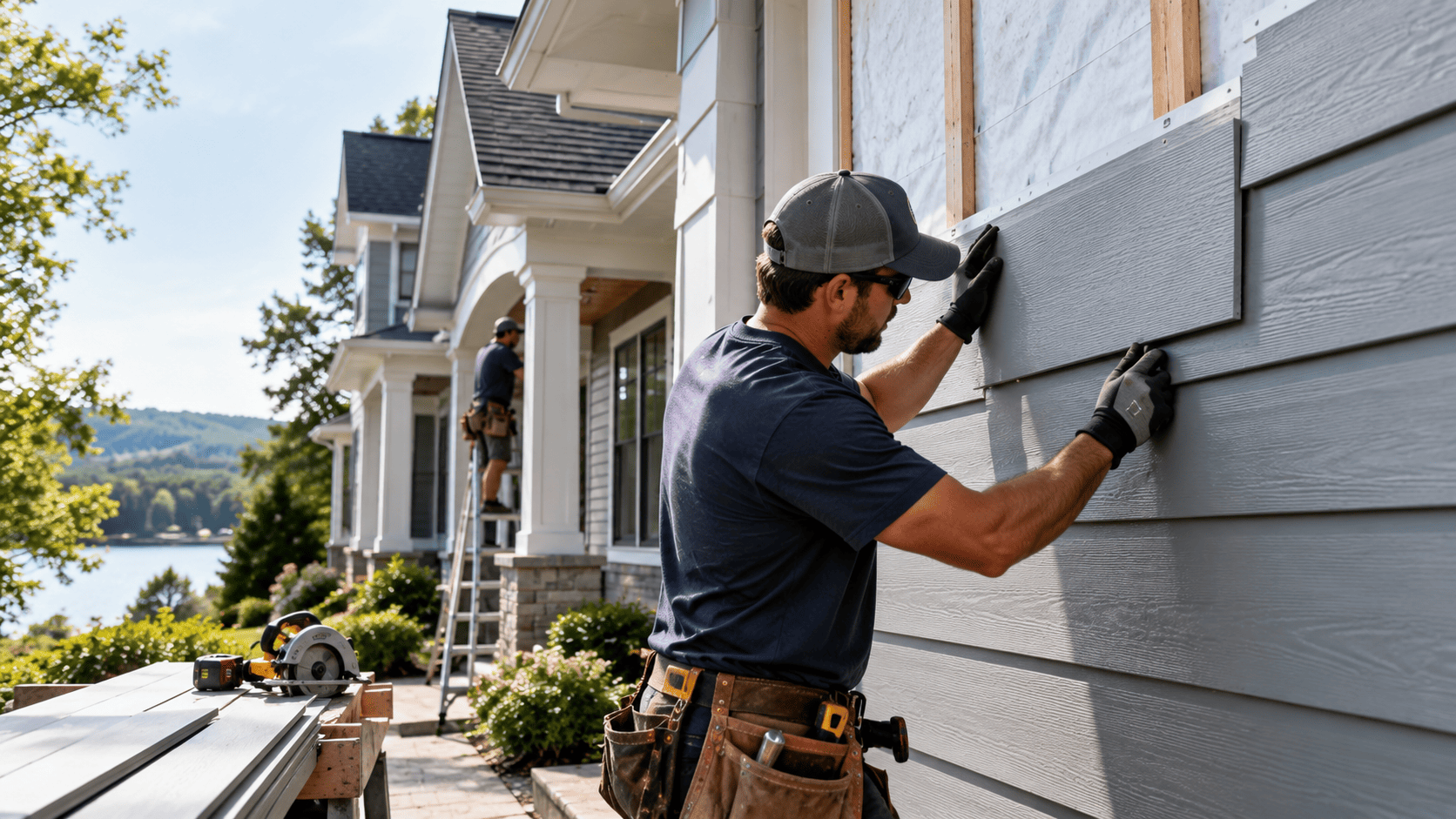
Proper installation begins well before the first siding board is attached. The process generally includes:
- Removing existing siding when necessary
- Inspecting the exterior sheathing
- Repairing damaged areas
- Installing or evaluating the weather-resistant barrier
- Addressing flashing around windows, doors, and other openings
- Measuring and cutting fiber cement products
- Installing siding with the correct clearances and fastening methods
- Completing trim and exterior details
- Finishing joints and painted surfaces as required
- Inspecting and cleaning the completed exterior
Each step contributes to the performance of the finished siding system.
Why Professional Installation Matters
Fiber cement is significantly heavier than many alternative siding products and requires specific handling, cutting, fastening, and clearance practices. Installation mistakes can compromise an otherwise high-quality material. Problems may develop when contractors fail to properly address:
- Moisture management
- Flashing
- Fastener placement
- Required clearances
- Seams and joints
- Manufacturer specifications
Professional installation is therefore an important part of protecting the investment. Contractors should follow the installation requirements established by the siding manufacturer rather than applying general siding techniques to every product.
What Affects Fiber Cement Siding Installation Costs?
There is no single project price that applies to every home. Several factors influence the final cost.
Home Size and Architecture
Larger homes require additional siding and labor. Architectural complexity can also affect installation requirements. Features such as multiple stories, gables, dormers, bay windows, porches, and numerous corners require additional cutting, fitting, and trim work.
Removal of Existing Siding
If old siding must be removed, labor and disposal become part of the project. Removal can also expose hidden conditions such as:
- Rotted sheathing
- Water damage
- Failed flashing
- Deteriorated exterior materials
These problems should be corrected before the new siding is installed.
Material and Style
Fiber cement products vary by manufacturer, profile, finish, and design. Traditional lap siding may have different material and labor requirements than shake-style products or a project incorporating several siding profiles.
Labor
Fiber cement’s weight and installation requirements can make it more labor intensive than vinyl siding. That additional labor is one reason homeowners should compare complete project proposals rather than simply comparing material prices.
Trim and Finishing
Window trim, door trim, corners, soffits, fascia, and architectural details can all influence project scope. A detailed estimate should clearly explain what is included.
The Importance of Moisture Management
Fiber cement itself is durable, but the wall assembly behind it still requires proper moisture protection. A complete exterior system may include:
- Weather-resistant barriers
- Proper window and door flashing
- Roof-to-wall flashing
- Correct siding clearances
- Properly detailed joints
Water that repeatedly reaches vulnerable areas behind siding can eventually damage sheathing or framing regardless of the siding material installed over it. This is why proper preparation and flashing should never be overlooked simply to reduce installation costs.
Can Fiber Cement Improve Energy Efficiency?
Fiber cement siding itself is not a high-performance insulation product. However, replacing siding provides an opportunity to evaluate the exterior wall assembly and identify potential improvements. These may include:
- Additional exterior insulation
- Improved air sealing
- Updated weather barriers
- Corrected gaps around windows and doors
The U.S. Department of Energy provides additional information about insulation, air sealing, windows, and other components that influence a home’s overall energy performance.
Fiber Cement Siding and Connecticut Weather
Exterior siding in Connecticut must perform through substantial seasonal changes. During the year, a home may experience:
- Hot, humid summers
- Heavy rainfall
- Strong storms
- Freezing temperatures
- Snow and ice
- Repeated freeze-thaw cycles
Fiber cement’s stability and resistance to common forms of deterioration make it well suited to demanding climates when installed correctly. Installation details remain critical. Even durable siding depends on a properly prepared wall system and effective moisture management.
Coordinating Siding and Window Replacement
Older siding and windows sometimes reach replacement age around the same period. These projects do not always need to happen together, but coordinating them can be beneficial because siding, flashing, and trim all intersect around window openings. If windows are already inefficient, damaged, difficult to operate, or approaching the end of their useful life, homeowners can review Signature Exteriors’ window replacement services while planning a larger exterior renovation. Coordinating the work may allow window flashing and exterior trim details to be integrated more efficiently.
What If the Roof Also Needs Attention?
Siding and roofing work together as parts of the home’s exterior protection system. If both are nearing replacement age, homeowners should discuss project sequencing with their contractor. Planning the projects together can help avoid disturbing recently completed exterior work. Homeowners evaluating several exterior improvements can learn more about Signature Exteriors’ roof replacement services as part of a comprehensive exterior assessment.
Understanding the Long-Term Value of Fiber Cement
The initial installation cost is only one part of evaluating a siding material. Long-term value should also consider:
- Expected service life
- Maintenance requirements
- Resistance to weather
- Repair requirements
- Appearance
- Curb appeal
- Manufacturer warranty
- Quality of installation
A lower upfront price does not automatically produce the lowest ownership cost, just as the most expensive siding is not necessarily the right option for every home. The objective is to choose a siding system that fits the property, budget, architectural style, and homeowner’s long-term priorities.
What Should a Fiber Cement Siding Estimate Include?
A detailed estimate helps homeowners understand exactly what they are comparing.
Homeowners should compare these details rather than focusing exclusively on the final price.
Signs Your Existing Siding May Need Replacement
A professional evaluation may be appropriate if existing siding shows:
- Cracking
- Warping
- Rot
- Loose sections
- Moisture damage
- Repeated paint failure
- Widespread deterioration
- Gaps around panels or boards
- Damage around windows and doors
- Frequent repair needs
Not every siding problem requires complete replacement. Isolated damage may sometimes be repairable, while widespread deterioration can make replacement the more practical long-term solution.
Frequently Asked Questions
How long does fiber cement siding last?
Fiber cement is designed as a long-lasting exterior material. Actual service life depends on the product, installation quality, climate exposure, and ongoing maintenance.
Is fiber cement siding more expensive than vinyl?
Fiber cement installation generally involves higher material and labor requirements than standard vinyl siding. Homeowners should compare durability, maintenance, appearance, and long-term value rather than upfront cost alone.
Does fiber cement siding require maintenance?
Yes. While maintenance requirements are generally lower than natural wood, homeowners should inspect painted surfaces, joints, flashing, caulking, and other exterior details periodically.
Can fiber cement siding look like wood?
Yes. Many fiber cement products are manufactured with textures and profiles designed to reproduce the appearance of traditional wood clapboards or shingles.
Is fiber cement suitable for Connecticut homes?
Fiber cement can be well suited to Connecticut’s variable climate because of its durability and stability. Proper installation, flashing, and moisture management remain essential.
Can fiber cement siding be painted?
Yes. Many fiber cement products can be painted or are available with factory-applied finishes. Maintenance schedules depend on the specific product and finish.
Is Fiber Cement Siding the Right Investment for Your Home?
Choosing siding requires balancing initial cost with durability, maintenance, appearance, and expected long-term performance. For homeowners who value a substantial exterior material, strong weather resistance, and the appearance of painted wood without the same maintenance demands, fiber cement siding installation can provide compelling long-term value. The quality of the installation is just as important as the siding itself. Proper preparation, flashing, clearances, fastening, and moisture management help ensure the finished system performs as intended. If your existing siding is deteriorating or you are considering a larger exterior renovation, Signature Exteriors can evaluate your home’s current condition and explain the siding options available. A professional assessment can help determine whether fiber cement is the right choice for your home’s architecture, budget, and long-term needs.