Vinyl Siding Installation Cost: Pricing Factors Every Homeowner Should Know
By Signature Exteriors
Key Takeaways
- Vinyl siding installation cost depends on home size, architectural complexity, siding quality, labor, insulation, trim, and existing exterior conditions.
- Removing old siding can reveal hidden damage that should be repaired before new materials are installed.
- Premium and insulated vinyl siding may cost more initially but can provide additional performance and durability benefits.
- Professional installation is essential for proper moisture management and long-term siding performance.
- Compare the complete scope of each estimate rather than choosing based only on the lowest price.
In this article
What Determines Vinyl Siding Installation Cost?
Replacing siding can transform a home’s appearance while strengthening its protection against rain, wind, moisture, and Connecticut’s changing weather. When researching vinyl siding installation cost, homeowners often find a wide range of pricing information. That is because siding projects are influenced by the specific characteristics of each property. Home size is important, but contractors must also consider architectural design, material selection, labor requirements, preparation, insulation, trim, and the condition of the existing exterior. Understanding these factors makes it easier to establish a realistic budget and compare siding estimates accurately.
1. Home Size and Exterior Design
Larger homes generally require more siding and labor, but interior square footage does not directly determine how much siding a property needs. Contractors measure the exterior surfaces and account for features such as:
- Number of stories
- Gables
- Garages
- Additions
- Windows and doors
- Dormers
- Bay windows
- Porches
- Exterior corners
Architectural complexity matters because detailed areas require additional measuring, cutting, flashing, and trim work. A simple one-story home may therefore have different installation requirements than a multi-story home with the same approximate exterior square footage.
2. Existing Siding Removal and Exterior Condition
Removing old siding adds labor and disposal requirements, but it also allows contractors to inspect the structure underneath. Once the existing siding is removed, contractors may discover:
- Rot
- Water damage
- Deteriorated sheathing
- Failed flashing
- Mold or mildew
- Previous installation problems
These issues should be corrected before the new exterior is installed. Because some damage cannot be identified until removal begins, homeowners should understand how their contractor handles unforeseen repairs. Homeowners considering replacement can learn more about Signature Exteriors’ siding installation and replacement services and what should be evaluated during a complete siding project.
3. Vinyl Siding Type and Quality
Vinyl siding is available in a wide range of products rather than a single standard material. Products can vary in:
- Thickness
- Rigidity
- Texture
- Color
- Wind resistance
- Impact resistance
- Warranty coverage
Popular styles include traditional horizontal siding, Dutch lap, board and batten, and shake-style profiles. Premium siding generally carries a higher material cost but may provide increased rigidity, more detailed finishes, stronger performance characteristics, and expanded design options. The appropriate product should balance budget, appearance, durability, and the homeowner’s long-term plans for the property.
4. Standard vs. Insulated Vinyl Siding
Insulated vinyl siding incorporates rigid foam backing that can add support and thermal resistance to the exterior wall system. Potential benefits include:
- Greater panel rigidity
- Improved insulation
- Reduced thermal bridging
- Increased impact resistance
- Improved indoor comfort
Insulated siding generally requires a greater upfront investment than conventional vinyl. Whether it makes sense depends on the home’s construction, existing insulation, energy performance, and renovation goals.
5. Weather Barriers and Flashing
Siding is only one part of a complete exterior wall system. A weather-resistant barrier behind the siding helps manage moisture, while properly installed flashing protects vulnerable transitions around windows, doors, penetrations, and roof-to-wall intersections. If these components are damaged or inadequate, addressing them during siding replacement can help prevent future moisture problems. These materials may not be visible after the project is complete, but they are critical to long-term exterior performance.
6. Trim, Soffits, and Fascia
Trim contributes to both the appearance and proper finishing of a siding installation. It may be required around:
- Windows
- Doors
- Corners
- Rooflines
- Utility penetrations
A siding project can also provide an opportunity to inspect soffits and fascia for rot, water damage, or deterioration. If these components require replacement, they can increase the scope of the project. Homeowners should determine whether they are included in the original estimate.
7. Labor and Installation Quality
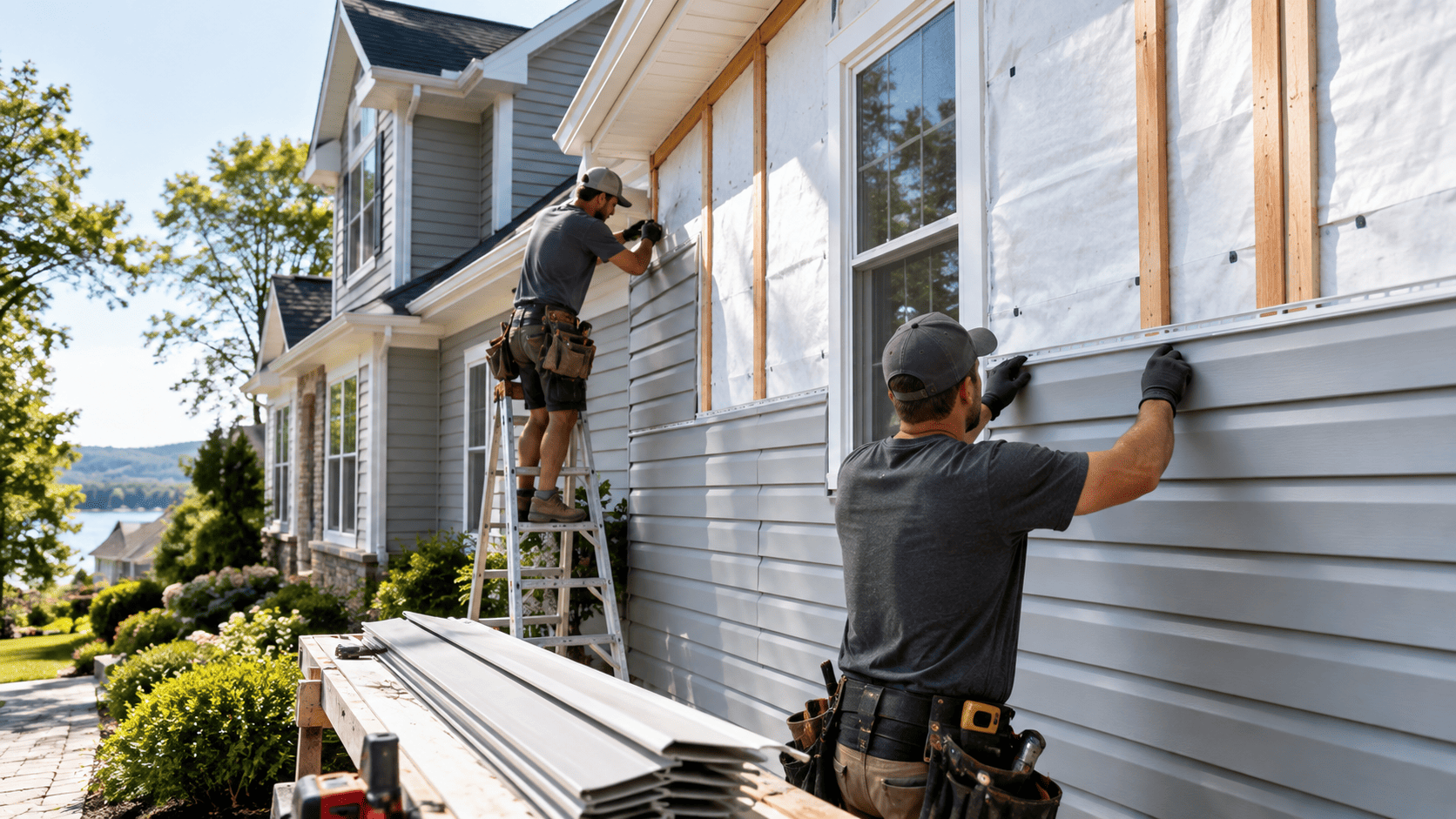
Even high-quality siding can perform poorly when installed incorrectly. Vinyl expands and contracts as temperatures change. Installers must use proper fastening techniques and leave appropriate space for movement. Poor installation can contribute to:
- Buckling
- Warping
- Loose panels
- Moisture intrusion
- Premature deterioration
For this reason, installation quality should carry as much weight as material selection when comparing contractors.
How Connecticut Weather Affects Vinyl Siding
Connecticut homes experience substantial seasonal variation, including:
- Summer heat and humidity
- Heavy rainfall
- Strong winds
- Freezing temperatures
- Snow and ice
- Freeze-thaw cycles
A properly installed siding system must accommodate temperature-related movement while helping protect the wall assembly against moisture. Product quality, proper flashing, and professional installation are especially important in climates with significant seasonal changes.
Can New Siding Improve Energy Efficiency?
Standard vinyl siding primarily functions as exterior cladding, so siding alone should not be viewed as an insulation system. However, replacement provides an opportunity to evaluate other components of the exterior envelope. Energy performance can depend on:
- Wall insulation
- Air sealing
- Windows
- Weather-resistant barriers
- Insulated siding
The U.S. Department of Energy provides additional information about how insulation, air sealing, windows, and other building components contribute to overall home energy performance.
Should Windows Be Replaced at the Same Time?
Siding replacement does not automatically mean windows need to be replaced. However, siding and windows meet at critical exterior openings. If older windows are already approaching the end of their useful life, coordinating the projects can allow flashing and finishing details to be addressed together. Homeowners planning a broader exterior renovation can explore Signature Exteriors’ window replacement services when evaluating whether aging windows should be included.
What If the Roof Also Needs Replacement?
Roofing and siding do not have to be replaced simultaneously, but both are major parts of the home’s weather protection system. If the roof is also approaching replacement age, discussing the order of the projects with a contractor can help homeowners develop a more efficient exterior improvement plan. Signature Exteriors’ roof replacement services provide additional information for homeowners evaluating both roofing and siding needs.
What Should a Vinyl Siding Estimate Include?
A siding estimate should provide enough detail to understand exactly what the contractor is proposing.
A detailed estimate makes it easier to compare contractors on equal terms.
Why the Lowest Estimate May Not Offer the Best Value
Price matters, but two estimates with different totals may not include the same work. A lower proposal could exclude siding removal, insulation, flashing improvements, trim work, disposal, repairs, or other project components. Instead of focusing only on the final number, compare the materials, preparation, installation scope, and warranty included with each proposal. The objective is to determine which project provides appropriate protection and value for the home.
Is Premium Vinyl Siding Worth It?
Premium vinyl siding can offer improvements in thickness, rigidity, wind resistance, impact resistance, texture, color selection, and warranty coverage. Whether those upgrades are worthwhile depends on the individual property. Homeowners planning to remain in their homes for many years may place greater value on durability and long-term performance. Others may prioritize affordability or a particular architectural appearance. A professional siding evaluation can help determine which features provide practical value rather than simply increasing the initial investment.
Signs It May Be Time to Replace Your Siding
Homeowners should consider having their siding evaluated if they notice:
- Cracking
- Warping
- Loose panels
- Significant fading
- Moisture problems
- Rot beneath siding
- Repeated repairs
- Mold or mildew
- Gaps between panels
- Deterioration near windows and doors
An isolated problem does not always mean the entire exterior needs replacement. A professional inspection can determine whether targeted repairs remain practical or whether deterioration is widespread.
Frequently Asked Questions
What affects vinyl siding installation cost the most?
The primary factors include home size, architectural complexity, siding product, labor, insulation, trim, removal requirements, and existing exterior conditions.
Can hidden damage increase the project cost?
Yes. Removing existing siding can expose deteriorated sheathing, moisture damage, failed flashing, or other problems that should be corrected before new siding is installed.
Does insulated vinyl siding cost more?
Generally, yes. Insulated siding contains additional material and can provide increased rigidity and improved thermal performance.
Can new siding improve energy efficiency?
It can contribute to improved exterior performance, particularly when the project also addresses insulation, air sealing, or the weather-resistant barrier.
Should I choose the lowest siding estimate?
Not automatically. Compare the materials, preparation, installation scope, repairs, warranties, and other included work before deciding which proposal provides the best value.
How do I know whether my siding needs replacement?
Cracking, warping, loose panels, recurring repairs, moisture problems, and widespread deterioration are common reasons to schedule a professional evaluation.
Making an Informed Siding Investment
Understanding vinyl siding installation cost means considering the entire project rather than focusing on a single price per square foot. The home’s size and design, siding product, preparation requirements, insulation, trim, and installation quality all contribute to the final investment. A detailed estimate should make these components clear so homeowners can compare options based on both immediate cost and long-term performance. If your siding is aging, damaged, or no longer providing the appearance and protection you want, Signature Exteriors can evaluate your home’s exterior and explain the available options. A professional assessment can help you establish a realistic budget and choose a siding solution that fits your home and long-term priorities.