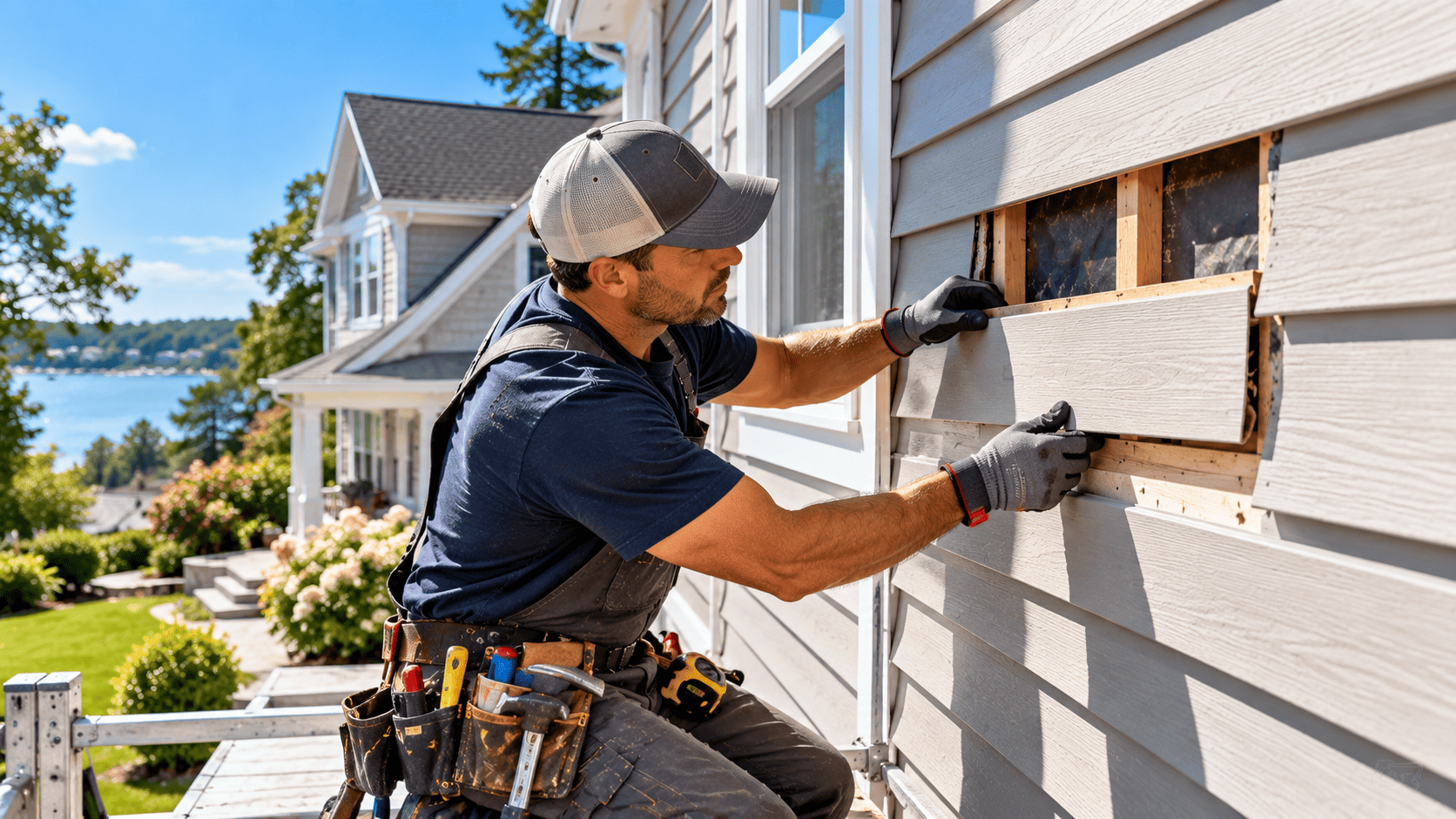
Siding does much more than determine how a house looks from the street. For homeowners in Stamford, CT, professionally maintained siding helps protect the home from rain, wind, moisture, temperature changes, and the demanding seasonal conditions common throughout Fairfield County.
- Professional siding repair services can address cracks, loose panels, storm damage, moisture problems, and localized deterioration before the damage spreads.
- Stamford homes face heavy rain, wind, snow, humidity, and freeze-thaw cycles that can gradually weaken exterior siding.
- Not every siding problem requires complete replacement. Localized damage can often be repaired when the surrounding siding remains in good condition.
- Moisture behind siding can damage sheathing, insulation, and other parts of the exterior wall, making early repairs important.
- The age, material, extent of damage, and availability of matching siding all help determine whether repair or replacement makes more sense.
- Professional inspection can identify whether visible siding damage is cosmetic or evidence of a larger exterior problem.
Why Siding Repairs Matter for Stamford Homes
Siding does much more than determine how a house looks from the street. It helps shield the structure from rain, wind, moisture, temperature changes, and other environmental conditions.
For homeowners in Stamford, Connecticut, maintaining that protection is especially important. Homes throughout Fairfield County experience humid summers, freezing winters, heavy rainfall, coastal weather influences, and occasional severe storms.
Over time, those conditions can damage even a well-maintained exterior.
Professional siding repair services allow homeowners to address problems before localized damage develops into a more extensive exterior issue. In many situations, repairing several damaged panels or correcting a vulnerable section can restore protection without requiring complete siding replacement.
The key is knowing what damage to look for and when a repair is still the appropriate solution.
Common Signs Your Siding Needs Repair
Some siding problems are easy to recognize. Others can remain unnoticed until moisture or deterioration begins affecting materials underneath the siding.
Stamford homeowners should periodically inspect their exterior for several common warning signs.
Cracked or Broken Siding
Cracks can develop because of impact damage, severe weather, age, or changes in temperature.
Even a relatively small crack can create an opening where moisture can reach materials behind the siding.
A few isolated cracks may be repairable. Widespread cracking across multiple sections can indicate that the siding system is reaching the end of its useful life.
Loose or Missing Panels
Strong winds can loosen siding panels or remove them entirely.
Missing siding exposes the materials underneath directly to weather. Loose panels can also allow wind-driven rain to reach areas that are normally protected.
These problems should be evaluated promptly, particularly following a major storm.
Warping or Buckling
Siding should generally lie evenly against the exterior.
Panels that appear warped, wavy, or buckled may indicate:
- Improper installation
- Excessive heat exposure
- Moisture problems
- Insufficient expansion space
- Age-related deterioration
The cause should be identified before the damaged material is repaired or replaced.
Rot or Soft Areas
Wood siding and underlying structural materials can deteriorate after repeated moisture exposure.
Soft areas, crumbling material, discoloration, or visible rot should never be treated as purely cosmetic problems.
The damaged area needs to be inspected to determine how far the deterioration extends.
Mold, Mildew, or Persistent Staining
Surface dirt is common, but recurring stains or biological growth can sometimes indicate excessive moisture.
Pay particular attention to areas around:
- Windows
- Doors
- Roof intersections
- Gutters
- Downspouts
- Exterior penetrations
The visible siding may only be one part of the problem. Moisture can affect materials underneath the exterior surface before major damage becomes visible.
Why Stamford Weather Can Damage Siding
Connecticut’s seasonal climate places exterior materials through repeated cycles of expansion, contraction, moisture exposure, freezing, and thawing.
Stamford’s location can also expose homes to strong winds and storm conditions.
Potential weather-related siding damage includes:
- Wind-loosened panels
- Cracking
- Impact damage from branches or debris
- Water infiltration
- Freeze-thaw deterioration
- Damage caused by overflowing gutters
- Moisture problems around windows and doors
After severe weather, homeowners should visually inspect the exterior even if there is no obvious damage from ground level.
When storms affect multiple exterior components, Signature Exteriors’ storm damage roof repair services can also help homeowners evaluate damage involving the roof and surrounding exterior.
Siding Repair vs. Siding Replacement
One of the most important decisions is whether damaged siding should be repaired or replaced. There is no single answer for every property.
- Damage is limited to a small area
- Most siding remains structurally sound
- Matching replacement material is available
- The siding is relatively young
- There is no widespread moisture damage
- The underlying wall remains in good condition
- Damage appears throughout the exterior
- The siding has reached an advanced age
- Repairs are becoming frequent
- Matching materials are unavailable
- Moisture has affected large sections
- Panels are extensively warped or deteriorated
- A major exterior renovation is already planned
Homeowners dealing with widespread deterioration can review Signature Exteriors’ siding installation and replacement services to better understand when a complete siding project may be appropriate.
What Happens During a Professional Siding Repair?
A quality repair begins with determining why the damage occurred. Simply replacing a visibly damaged panel without addressing the cause can allow the problem to return.
The exact process varies depending on the siding material and extent of the damage.
Why Moisture Behind Siding Is a Serious Concern
One of siding’s most important functions is helping the exterior wall assembly manage water.
If damaged siding, failed flashing, or another exterior problem allows repeated moisture intrusion, materials underneath may begin to deteriorate.
Possible consequences include:
- Rotted sheathing
- Damaged insulation
- Mold or mildew
- Deteriorated framing
- Interior staining
- Reduced energy performance
The U.S. Environmental Protection Agency explains that controlling moisture is an important part of preventing mold growth and protecting building materials. Homeowners can review the EPA’s guidance on moisture control and mold prevention for additional information.
Don’t judge siding damage solely by appearance. A relatively small exterior defect can sometimes conceal a larger moisture problem.
Can Damaged Siding Affect Energy Efficiency?
Siding itself is only one component of the home’s exterior envelope, but damaged siding can expose weaknesses in the systems underneath it.
Gaps, damaged insulation, deteriorated weather barriers, and poorly sealed areas around windows may contribute to unwanted air movement and heat transfer.
When siding repairs are performed, it can be useful to evaluate nearby:
- Insulation
- Weather-resistant barriers
- Window openings
- Door openings
- Exterior penetrations
Correcting these problems can improve the overall integrity of the exterior wall system.
Siding Damage Around Windows
Windows deserve particular attention because several exterior materials and water-management components meet around each opening.
If siding near a window shows staining, deterioration, swelling, or repeated damage, the siding itself may not be the original cause.
Possible problems include:
- Failed flashing
- Deteriorated caulking
- Window leaks
- Improper exterior detailing
- Aging window components
Replacing damaged siding without correcting the source of water intrusion can lead to recurring problems.
For homes where the windows themselves are deteriorating, Signature Exteriors’ window replacement services can be considered as part of a broader exterior evaluation.
Can Individual Siding Panels Be Repaired or Replaced?
Often, yes.
When damage is localized and compatible replacement material is available, individual sections may be replaced without re-siding the entire house.
The challenge is achieving a reasonable match.
Older siding may have:
- Faded from sunlight
- Been discontinued
- Changed in appearance over time
- Used a profile that is no longer manufactured
A new panel of the original color may therefore appear different from siding that has been exposed to the elements for many years.
This does not automatically make a repair impossible, but appearance should be considered when evaluating the options.
How Much Do Siding Repairs Cost?
The cost of siding repair varies because the scope can range from replacing a few damaged panels to opening a larger section of the exterior and repairing materials underneath.
| Cost Factor | Why It Matters |
|---|---|
| Extent of damage | Larger damaged areas require more material and labor. |
| Siding material | Different products have different repair requirements. |
| Accessibility | Upper stories and difficult areas may require additional equipment. |
| Hidden damage | Damaged sheathing or framing increases the repair scope. |
| Material matching | Older or discontinued siding may be harder to replace. |
| Flashing work | Water-related problems may require additional corrections. |
| Trim | Damaged corners, window trim, or other details may need repair. |
A professional inspection provides a more useful estimate than attempting to determine repair costs based only on the visible size of the damaged area.
When Should Siding Be Inspected After a Storm?
After significant wind, hail, falling branches, or other severe weather, homeowners should check the exterior once conditions are safe.
Look for:
- Missing panels
- Loose siding
- Cracks
- Dents or impact marks
- Damaged trim
- Debris against the house
- Problems around gutters
- New water stains
Damage does not always appear dramatic. A loosened panel or damaged flashing detail can still create a pathway for water.
Photographing visible storm damage can also provide a useful record before repairs begin.
Preventing Future Siding Damage
Not every problem can be prevented, particularly during severe weather, but routine exterior maintenance can reduce avoidable deterioration.
Homeowners should:
- Inspect siding periodically
- Keep gutters and downspouts functioning properly
- Trim branches away from the house
- Address damaged panels promptly
- Monitor window and door openings
- Keep vegetation from pressing against siding
- Watch for recurring moisture stains
- Have storm damage evaluated when necessary
Gutters are particularly important because they help direct roof runoff away from siding and the foundation. Overflowing or damaged gutters can repeatedly expose exterior walls to unnecessary moisture.
Choosing Siding Repair Services in Stamford, CT
When hiring a siding contractor, homeowners should look beyond whether a company can simply replace the damaged material.
A thorough contractor should evaluate the reason the siding failed and determine whether nearby exterior components are contributing to the problem.
Questions to ask include:
- What caused the damage?
- Is the problem limited to the visible area?
- Is there evidence of moisture underneath?
- Can the existing siding be matched?
- Does flashing need repair?
- Is replacement necessary, or will a localized repair solve the problem?
- What materials will be used?
- What warranty applies to the work?
Clear answers help homeowners understand whether the recommended work addresses the actual problem rather than only its appearance.
Not Sure Whether Your Siding Needs Repair or Replacement?
Have the affected area professionally evaluated to identify the cause of the damage and determine the appropriate solution for your home’s exterior.
Frequently Asked Questions
Can damaged siding be repaired without replacing the entire exterior?
Yes. Localized siding damage can often be repaired when the surrounding material remains in good condition and a suitable replacement product is available.
How quickly should damaged siding be repaired?
Damage that exposes underlying materials or creates an opportunity for water intrusion should be addressed promptly. Waiting can allow a relatively small problem to affect sheathing or other parts of the wall.
What causes siding to come loose?
Strong winds, improper installation, aging materials, impact damage, and failed fasteners can all contribute to loose siding.
How do I know if water is getting behind my siding?
Warning signs can include staining, mold, soft areas, peeling interior finishes, recurring moisture problems, or visible deterioration near exterior openings. A professional inspection may be necessary because hidden moisture is not always visible from the exterior.
Can siding be repaired after storm damage?
Yes. The appropriate solution depends on the extent of the damage. Isolated areas may be repairable, while widespread storm damage may make larger replacement work necessary.
Is it difficult to match older siding?
It can be. Existing siding may have faded, and some colors or profiles may no longer be manufactured. A contractor can determine what matching options are available.
Protecting Your Stamford Home with Timely Siding Repairs
Siding damage does not always mean a home needs an entirely new exterior. When deterioration is localized, professional siding repair services can restore damaged areas, help prevent moisture intrusion, and extend the useful life of the existing siding.
The most important step is determining what caused the damage. Cracks, loose panels, staining, and deterioration can sometimes be symptoms of problems involving flashing, moisture, windows, gutters, or the underlying wall assembly.
For homeowners in Stamford, CT, addressing those issues early can help prevent a relatively manageable repair from becoming a much larger exterior project.
If you notice damaged, loose, cracked, or deteriorating siding, Signature Exteriors can evaluate the affected area and determine whether repair or replacement is the appropriate solution for your home.
Protect Your Home’s Exterior
Contact Signature Exteriors to discuss your siding and determine the right solution for your property.